The photos below were taken following Power 2010.
The Power2010 stunt was to publicise the release of their St George’s Day 2010 press release which revealed that 68% agree with the statement: “England should have its own parliament with similar powers to those of the Scottish Parliament”.
The projection didn’t last long because the police turned up and unplugged the projector, implying that those responsible were breaking the law, taking the names and addresses of those involved, and citing anti-terrorism law, section 44.
This is England. A land without democratic voice, in which the police prevent people from projecting the national flag onto a parliament that refuses to fly that flag in order to combat “terrorism”.
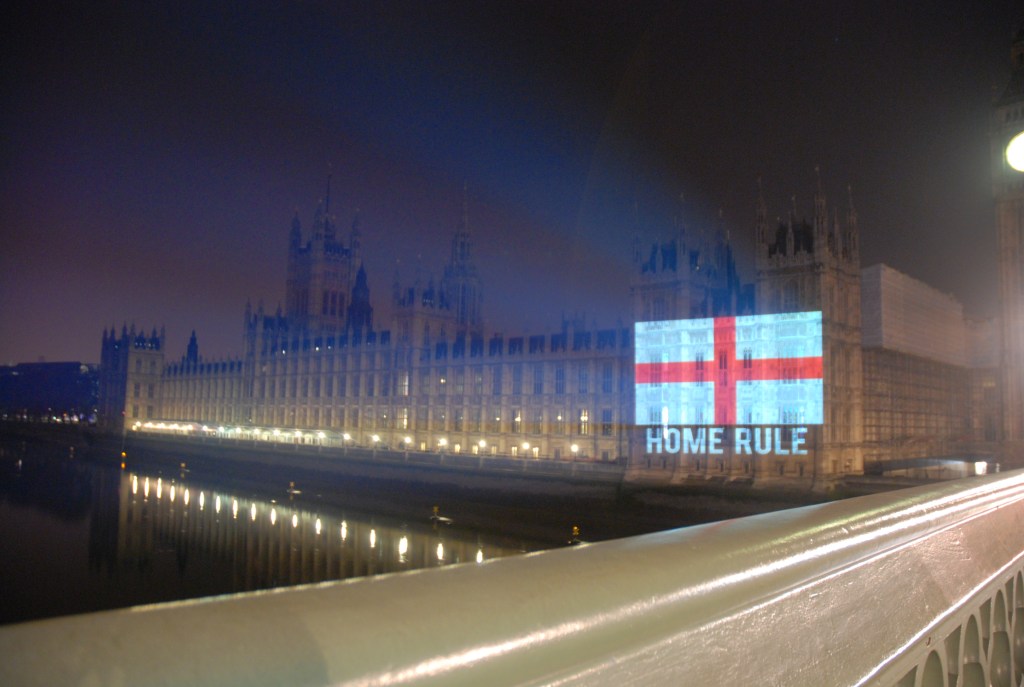
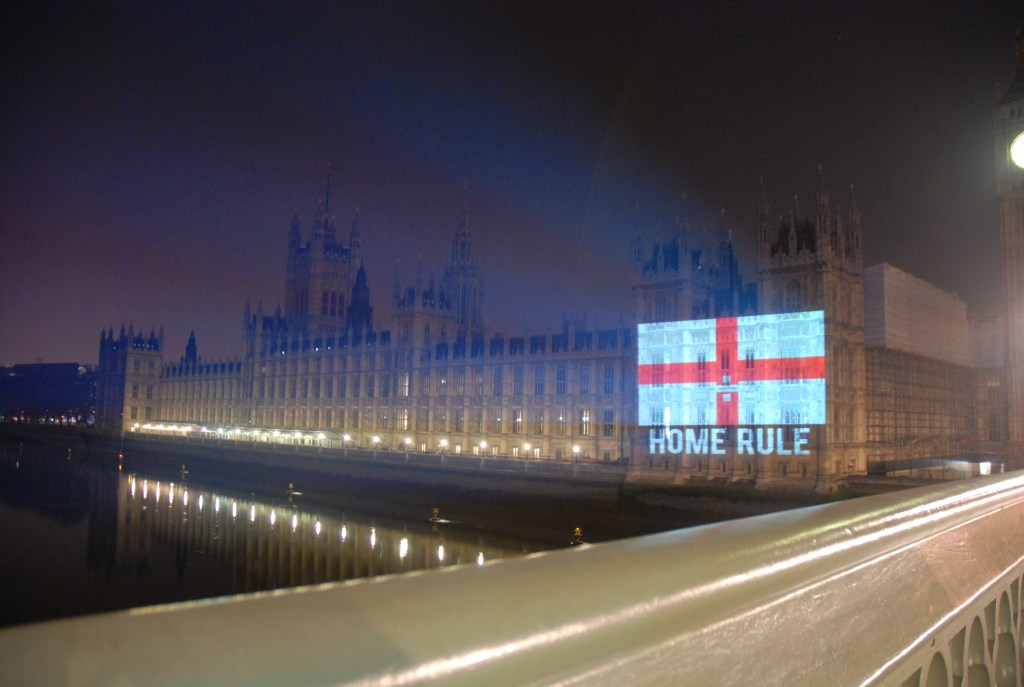
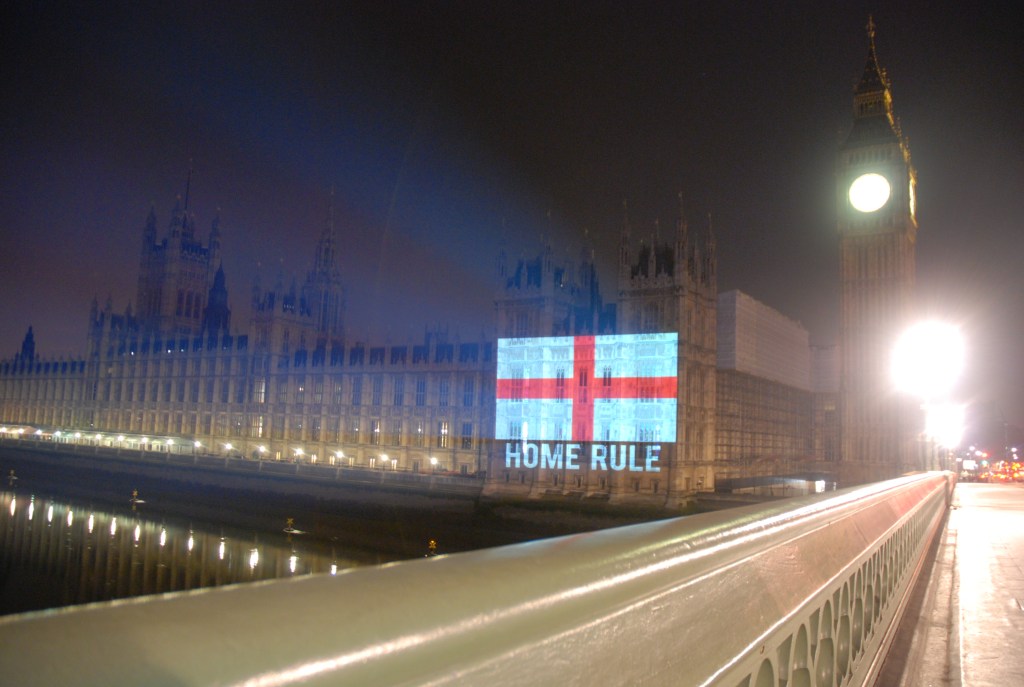
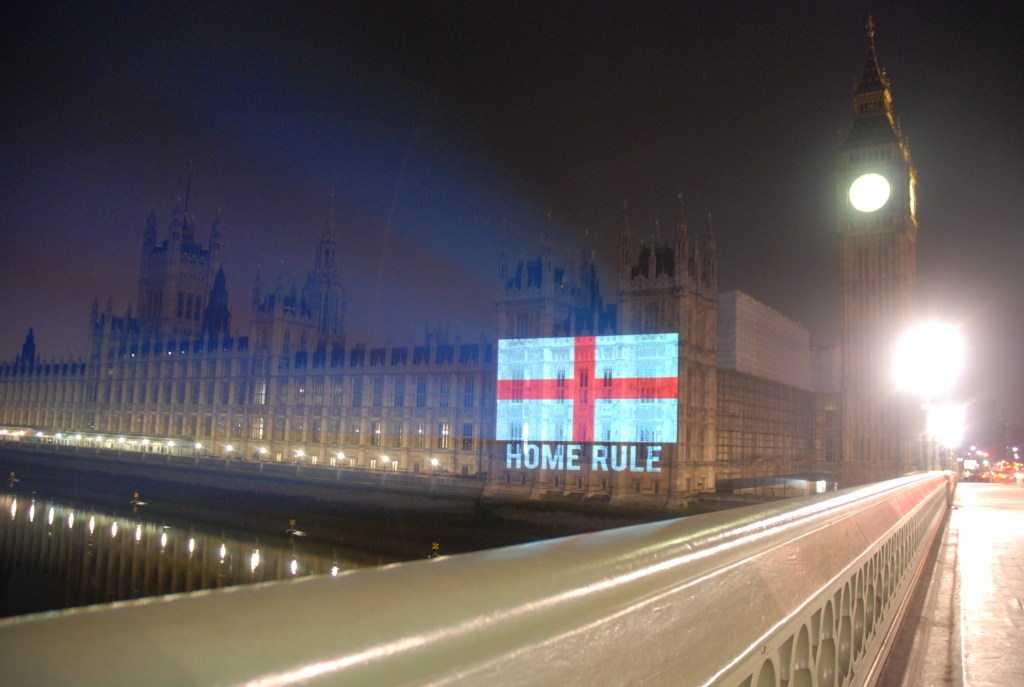
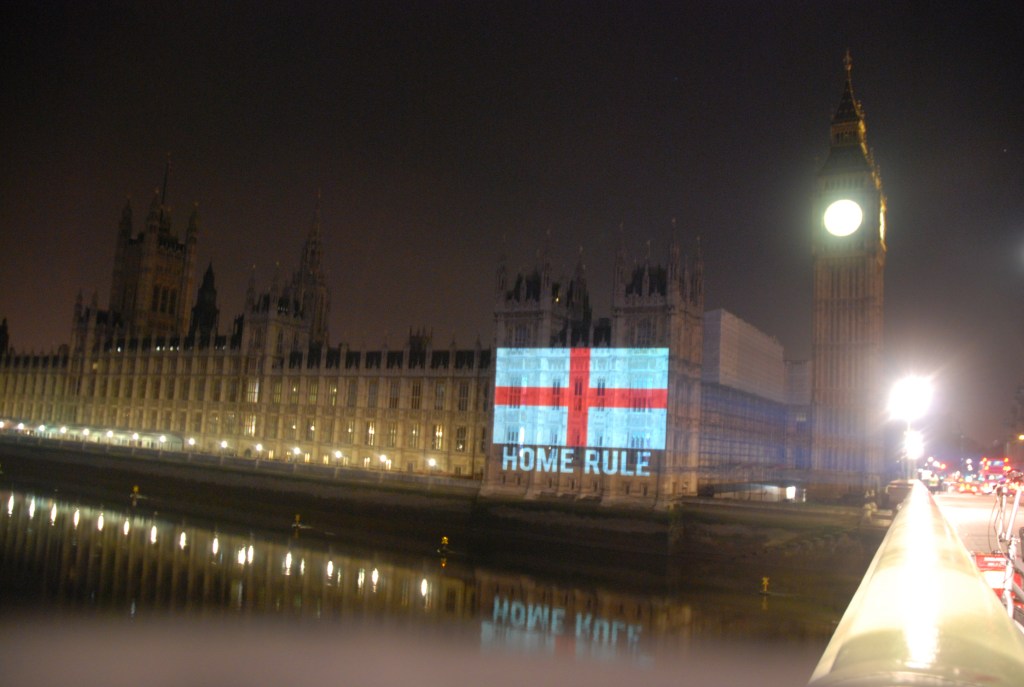
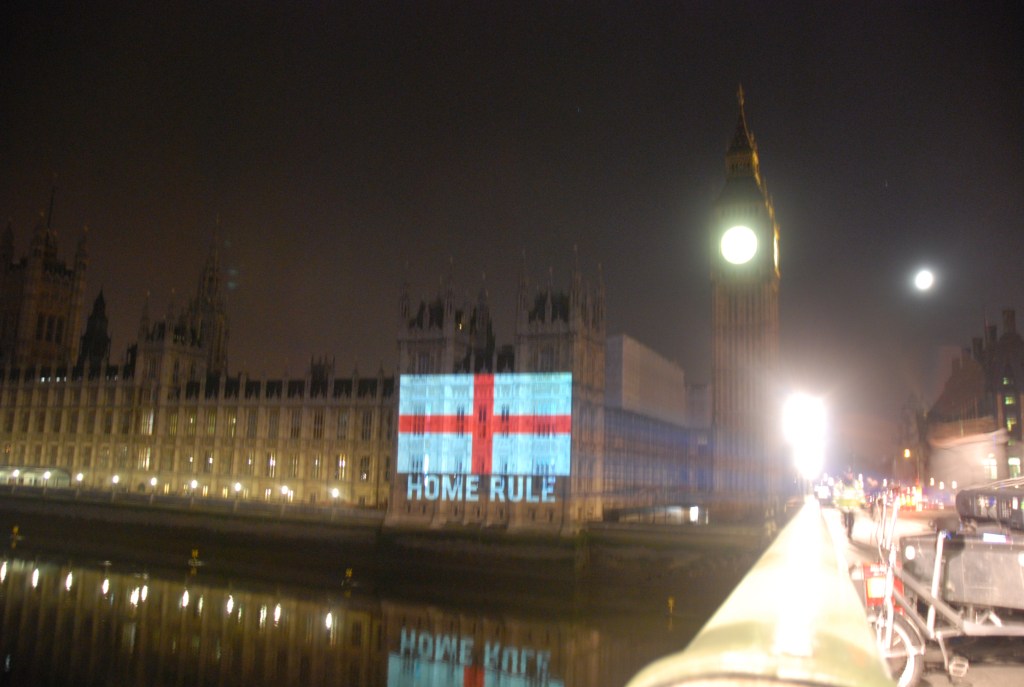
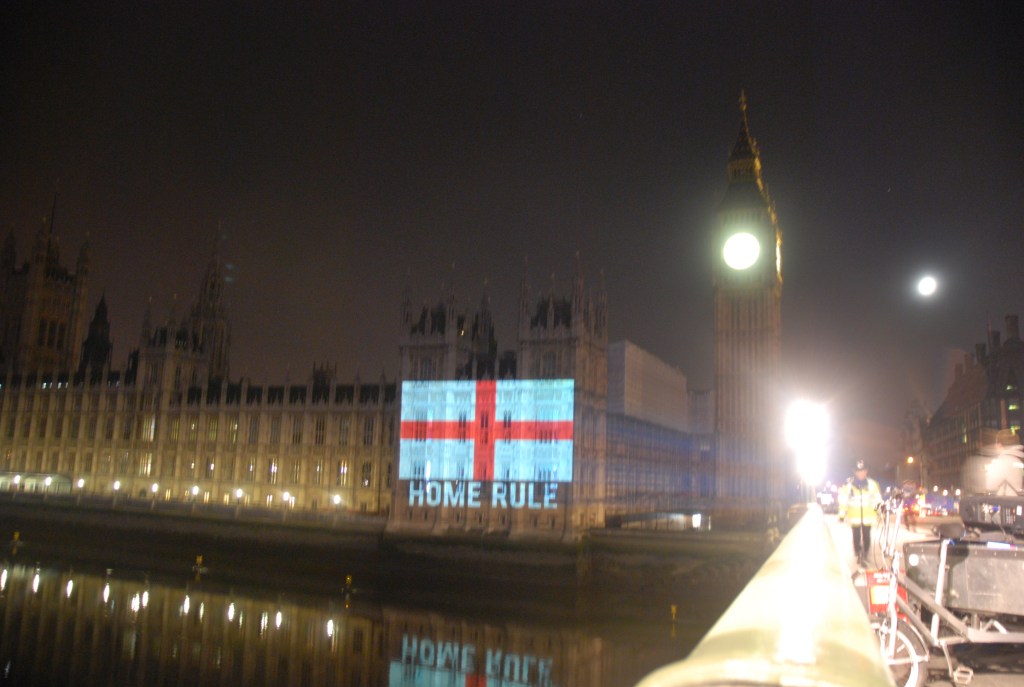
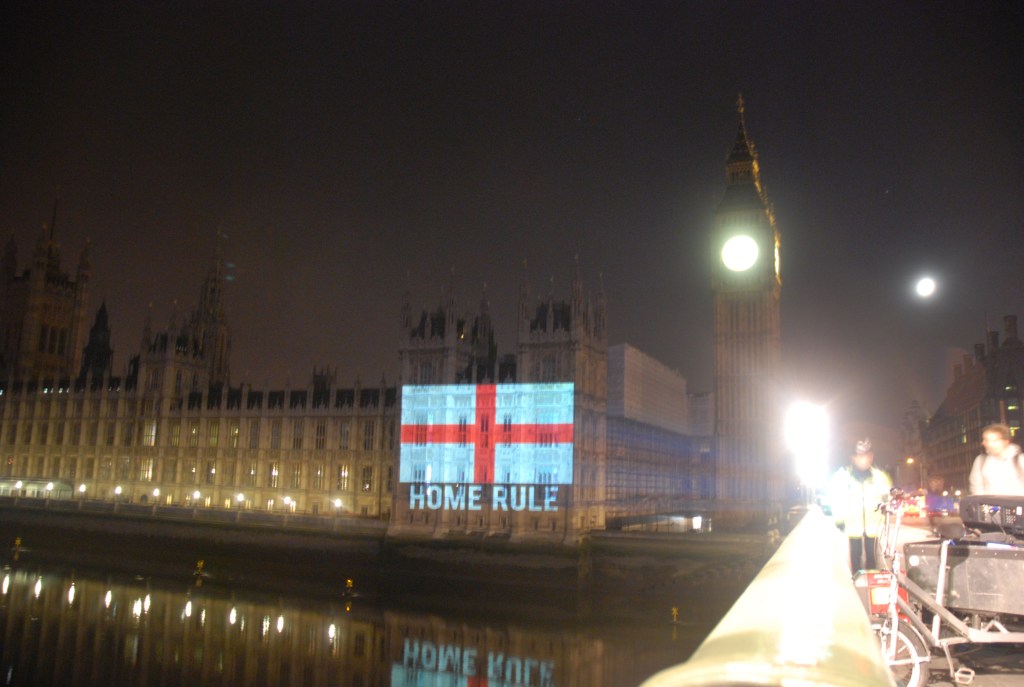


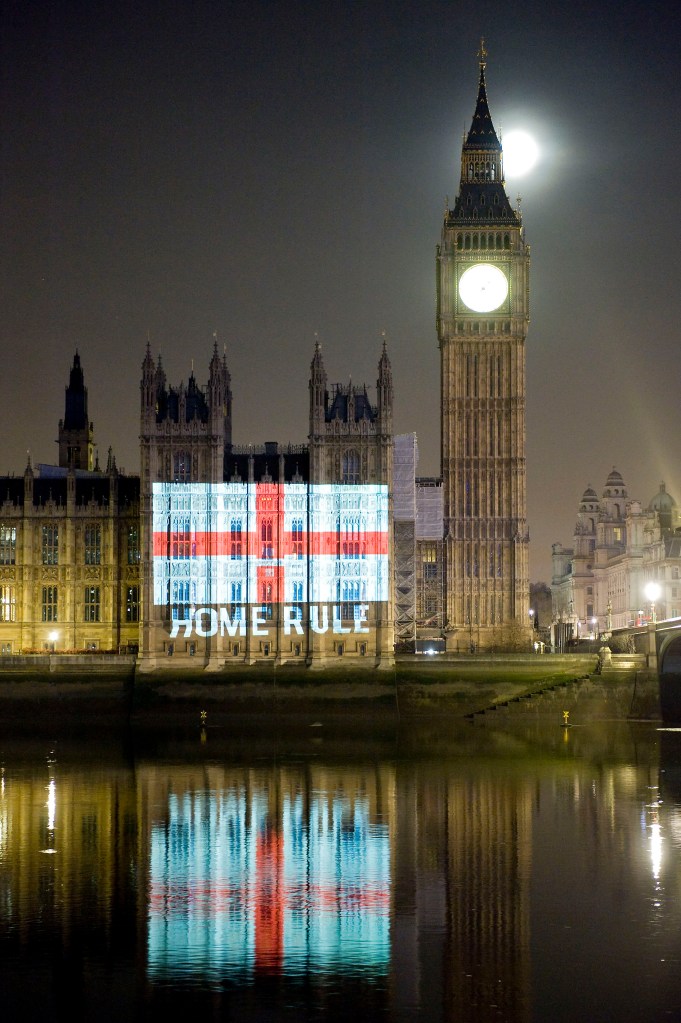
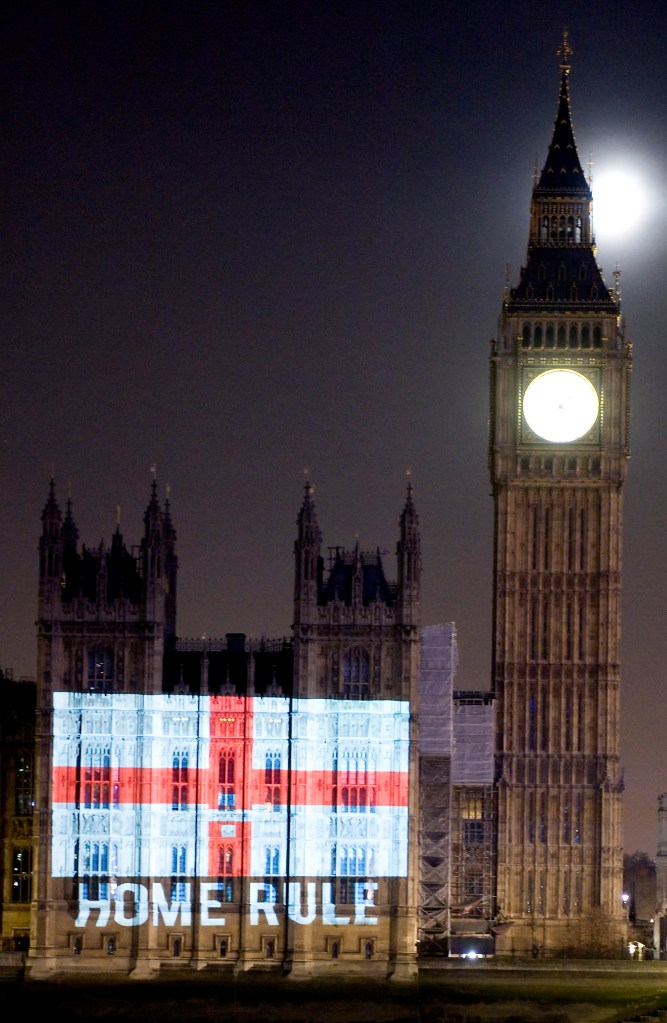
Please feel free to use any of these images with a credit or link back to English Commonwealth.
The ICM poll commissioned by Power2010 also revealed that an even greater proportion of people in England – 70% – would support “English Votes on English Laws”, the policy that Power2010 is promoting as part of its five point pledge.
The ICM poll shows a large majority (70%) of voters say that laws for England should be made by the House of Commons but only MPs representing English constituencies should be able to vote on them. English Votes on English Laws (EVoEL) is one of the five changes to fix politics backed by over 100,000 votes which now forms the POWER Pledge being put to all candidates standing in the General Election.
The poll of 1033 people across England also shows that less than a quarter (23%) of people in England feels either “more English than British” or “English not British”. Almost half – or 46% – of those questioned in the poll say they feel “equally British and English”. 24% of those questioned said they feel either “British not English” or “more British than English”, according to the poll. POWER2010 says this means that the fairness of decision-making matters more to people than Englishness.
On the matter of identity the ICM data revealed that 77% of people surveyed felt English to some degree, so it’s not apparent why Power2010 believe that ‘the fairness of decision making matters more to people than Englishness’. Devolution to Scotland and Wales was sold on the message that devolution acknowledged the dual nature of national identity, recognising both Scottish identity and British identity, or Welsh identity and British identity. The English too have a dual national identity, yet unlike the Scots and the Welsh, the English are denied democratic expression of their sub-state national identity.
To this date English Votes on English Laws has not been implemented, though David Cameron’s government did introduce an enfeebled version of it that prevented MPs from Scottish, Welsh and Northern Irish constituencies from voting on certain stages of English legislation. Even that has since been abolished following complaints from Scottish, Welsh and Northern Irish MPs that they were no longer equal members of the House.

 English Commonwealth