In an open letter to the Guardian last month, a group of democracy campaigners called on the government to announce a timeline for public consultation over House of Lords reform.
We’re calling on the government to deliver on its manifesto promise of a proper consultation on the future of the Lords, including via a representative citizens’ assembly, to let the people decide who should be holding politicians to account and making sure laws are sensible and fair.
English Commonwealth fully supports a citizens’ assembly on House of Lords reform, especially as Labour seem intent on refashioning it as a Senate of the Nations and Regions. The English don’t support regionalisation and it would be wrong for Labour to introduce it on the pretext of reforming the Lords. Let the people have a say.
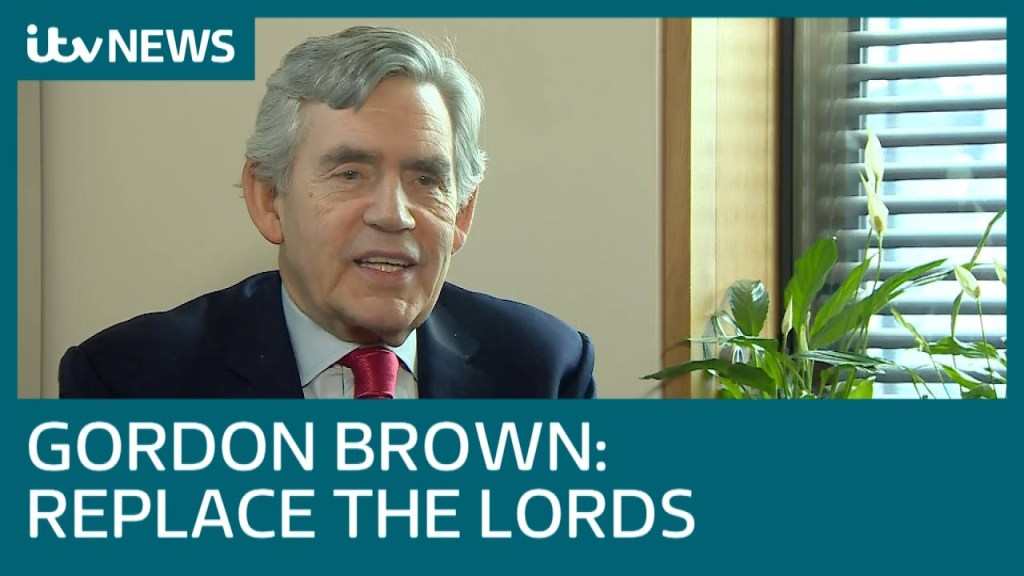
“where Britain becomes as it should be – a Britain of nations and regions” – Gordon Brown, 29th Jan 2001
Brown’s Britain of nations and regions is a Britain in which Scotland and Wales are the ‘nations’ and England is ‘the regions’. That is a fundamental change to our traditional concept of the UK: a union of nations.
Brown’s ‘union of nations and regions’ relegates England to an internecine rivalry of UK regions without a collective national voice, and implies that Scotland and Wales are equivalent to English regions. His plans also have the potential to introduce the West Lothian Question to the Upper House.
It is not what the English want, as the authors of the most comprehensive study of English attitudes have repeatedly pointed out.
“most of the liberal left continue to find demotic Englishness so unsettling that, when not avoiding the issue altogether, they would rather divide England into regions, a top-down solution dressed in the guise of local accountability that finds little support among the English public.” – Professor Richard Wyn Jones and Professor Ailsa Henderson, The Times, 2 July 2021
“when asked to look to the future it is clear that a majority of England’s population favours all England rather than any of the much-touted regional ‘solutions’ to the problem of English governance. To be precise, 62% of respondents want England to be treated as a single unit as compared to 20% who want each region to be treated as a separate unit. As might perhaps be expected, there is a national identity dimension to this with 77% of those who describe themselves as English not British wanting England to be treated as a single unit. But it is also the majority preference of those who describe themselves as British not English (53%).” – Professor Richard Wyn-Jones, UK in a Changing Europe, 23 Feb 2020
Let a citizens’ assembly shine a light on the difference between elite attitudes to how England should be governed and how the English people think England should be governed.

 English Commonwealth